 Setup & Service Videos

 (919) 323-4830

When it comes to crushing operations, maximizing tons per hour (TPH) is everything.
The difference between producing 40 TPH and 50 TPH may not sound dramatic at first, but in the real world, that production increase can mean thousands of additional dollars in profit on every job.
For contractors, recyclers, and aggregate producers, efficiency is what separates a hugely profitable operation from one that makes average profit.
Why Tons Per Hour Matters
Let’s look at a real-world example using a Senya 5 MICRO Crusher.
Imagine a contractor has a 1,000-ton concrete demolition job.
If they haul material away and then purchase aggregate for that job or others, the costs add up quickly:
- Disposal costs: approximately $10,000 A bare minimum even if hauling with your own trucks and no tipping/dumping fee!
- Replacement aggregate costs: $30,000 to $40,000+
Even at the very low end, that’s at least $40,000 if not $50,000+ in combined costs.
Now imagine you offer to crush and recycle the material on-site for $30,000, saving the contractor a lot of money while creating a very profitable job for yourself.
Here’s where production efficiency becomes critical:
At 40 TPH
- 1,000 tons ÷ 40 TPH = 25 crushing hours
- Realistically, about 5 working days
At 50 TPH
- 1,000 tons ÷ 50 TPH = 20 crushing hours
- Roughly 4 working days
That single increase in efficiency saves an entire day of operation and the associated labor costs of that extra day as well.
On a $30K 1000 ton job:
- 5 days = $6,000/day
- 4 days = $7,500/day
On a $40K 1000 ton job:
- 5 days = $8,000/day
- 4 days = $10,000/day
On a $50K 1000 ton job:
- 5 days = $10,000/day
- 4 days = $12,500/day
It all depends on the market rates of the hauling and disposal costs and aggregate purchase costs of the area.
Hauling with you own trucks costs at least $10/ton including fuel and labor and wear and tear at a very minimum and can easily approach $15/ton with fuel prices and if there are any dumping/tipping fees.
The nationwide average cost for aggregate in ’26 is $35-$50+ per ton delivered easily, and costs continue to skyrocket.
Even at the very low end of those costs…..That’s a MAJOR difference in profitability. And at more average costs the potential profit and savings of your crushing operation can be HUGE!!!
Proper Material Preparation Is Critical
The single most important factor in maximizing production is proper material preparation.
Generally speaking:
- Smaller material feeds better
- Oversized pieces slow production
- Excessive fines, dirt, or wet clay reduce feeder efficiency
However, there is a balance.
Material that is too small can move slowly across the vibrating feeder, especially below approximately 3-4 inches. Larger chunks often bounce and flow more efficiently, as long as they are small enough to fit properly into the jaw opening.
The goal is consistent material flow.
Keep the Jaw Well Fed at All Times
One of the biggest mistakes operators make is underfeeding the crusher.
Many operators are used to weaker crushers that cannot handle aggressive feeding, so they hesitate to keep the jaw full. That is not the case with Senya Crushers. The Senya 5 is designed to run choke-fed. That means the jaw should remain completely full of material whenever possible. If material is slowly easing into the jaw opening and dropping in instead of continuously feeding and maintaining a constant pile of material in the jaw, production rates can drop into the 25–30 TPH range.
A properly choke-fed Senya 5 can easily exceed its 50 TPH rating under the right conditions.
The key is maintaining a consistent flow of material and keeping the jaw always packed with material. The Senya 5 is specifically engineered to handle this type of aggressive feeding without the issues commonly experienced with weaker compact crushers.
For additional tips and a visual demonstration, check out our article and video:
Maximizing Senya Performance | Feeder Speed Adjustment Tips
This guide walks through feeder adjustments (though you should rarely need to adjust the factory setting if ever), choke-feeding techniques, and setup tips that can dramatically improve production and overall crushing efficiency.
Why the Senya 5 Has Unequalled Superior Crushing Power
Crushing performance comes down to several critical factors:
- Jaw housing strength
- Flywheel weight
- Jaw design and crushing technology
This is where the Senya 5 separates itself from competitors.
Many competing compact crushers use flywheels weighing approximately 200 pounds each.
The Senya 5 uses:
- Two massive 600-pound flywheels, triple the size and corresponding crushing power of our closest competitor on a comparably sized crusher.
- 1,200 pounds of total flywheel crushing power
That crushing force allows the Senya 5 to process the hardest material with Moh’s hardness of 8-8.5:
- Hard granite
- River rock
- Blue stone
- Natural rock and native stone materials
These materials are significantly harder than the following at Moh’s hardness of 3-3.5:
- Concrete
- Asphalt
- Brick
- Block
Most compact crushers are designed primarily for concrete recycling because they simply do not have the crushing power required for harder materials. BEWARE OF FALSE CLAIMS BY CHEAP IMPORTS!!! Many even admit they are for concrete only and can’t handle harder native stone.
The Senya 5 is designed to be way overbuilt in crushing power for this size jaw crusher, it can handle the hardest material you can throw at it with ease. With concrete, block, and asphalt the crusher hardly knows it’s even working. This translates into long term reliability, productivity, operation and maintenance cost efficiency, and most important- PROFITABILITY!
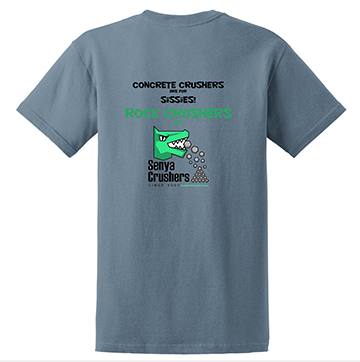
It’s exactly why we say, “Concrete Crushers are for Sissy’s…ROCK CRUSHERS by Senya Crushers!!!””
Don’t Be Afraid to Feed the Crusher Aggressively
The Senya jaw design naturally regulates incoming material without the need for complicated conveyor sensor systems that constantly require maintenance and don’t properly feed a jaw.
You cannot “overfeed” a properly operating Senya Crusher. You want it choke fed at all times to get the maximum productivity out of your crusher. The only real concern is oversized material that physically cannot enter the jaw opening. See below for the best solution to this.
This is why having an operator monitoring the jaw can dramatically improve production tons per hour.
Why a Hydraulic or Electric Hammer Available Is a Huge Advantage
If an oversized piece reaches the jaw opening, shutting the machine down wastes valuable time.
Instead, operators using the optional step-down transformer setup in a Senya 5 can use an electric hammer to quickly crack oversized material and continue crushing immediately. This keeps production flowing continuously and eliminates unnecessary downtime. Even temporary bridging or minor jams can often be corrected quickly without stopping the crusher completely.
Every minute saved increases profitability.
Wet Material and Excessive Fines Reduce Production
Moisture and fines are major production killers.
Wet clay, dirt, and fine materials:
- Slow feeder movement
- Reduce vibration efficiency
- Cause material to pack together
- Restrict jaw feeding
Dry, clean material always processes faster. The less dirt and fines mixed into the feed material, the better your production rates will be. Loading with a skeleton bucket to shake as many fines out as possible prior to loading can make a significant difference in the feeder efficiency as those fines can dampen the effect of the feeder vibration to move material into the jaw.
Crusher Setup Angle Can Dramatically Affect Production
One often-overlooked and absolutely CRUCIAL factor is crusher setup angle.
A perfectly level crusher may actually reduce production because material drops directly into the jaw instead of maintaining a full choke feed.
Even a slight forward tilt can dramatically increase production.
In many cases, operators have increased output from 25 – 30 TPH to 50+ TPH simply by adjusting machine angle.
Proper Setup Tips
- Lower the front legs slightly
- Raise the rear slightly
- Allow the feeder to run slightly downhill
However, it is absolutely critical to:
- Keep weight on the trailer chassis
- Keep legs snug to the pads
- Avoid lifting the machine entirely onto the support legs
The Senya trailer chassis is part of the machine’s vibration mitigation system. Controlled flex and movement are important for both durability and performance.
Even lowering the discharge conveyor a few inches can make a major difference in production. A minor 3-4″ drop in the end of the discharge conveyor of your crusher can be the difference between 30 tph and 50tph+!
Reduce Loader Travel Time
Loader efficiency matters just as much as crushing efficiency.
Position the crusher:
- As close to the material pile as possible
- To minimize loader cycle times
- To reduce fuel consumption
- To reduce wear on loading equipment
Every unnecessary loader trip costs money. It much easier and efficient to bring the crusher to the material than vice versa.
The Truth About Tracked Crushers
Most manufacturers promote tracked crushers as a major advantage. The simple reason is that they don’t manufacture the machines in the USA and they don’t have DOT APPROVED trailers customer built here specifically for our USA production. DON’T BE FOOLED BY THEIR MOBILITY CLAIMS OF TRACKED MACHINES.
In reality, tracked systems introduce:
- Hydraulic maintenance
- Additional wear points
- More complexity
- Higher operating costs
- additional transportation costs and time
Most if not all tracked machines rely on imported chassis systems as they don’t have the ability to produce machines built on trailers DOT compliant in the United States.
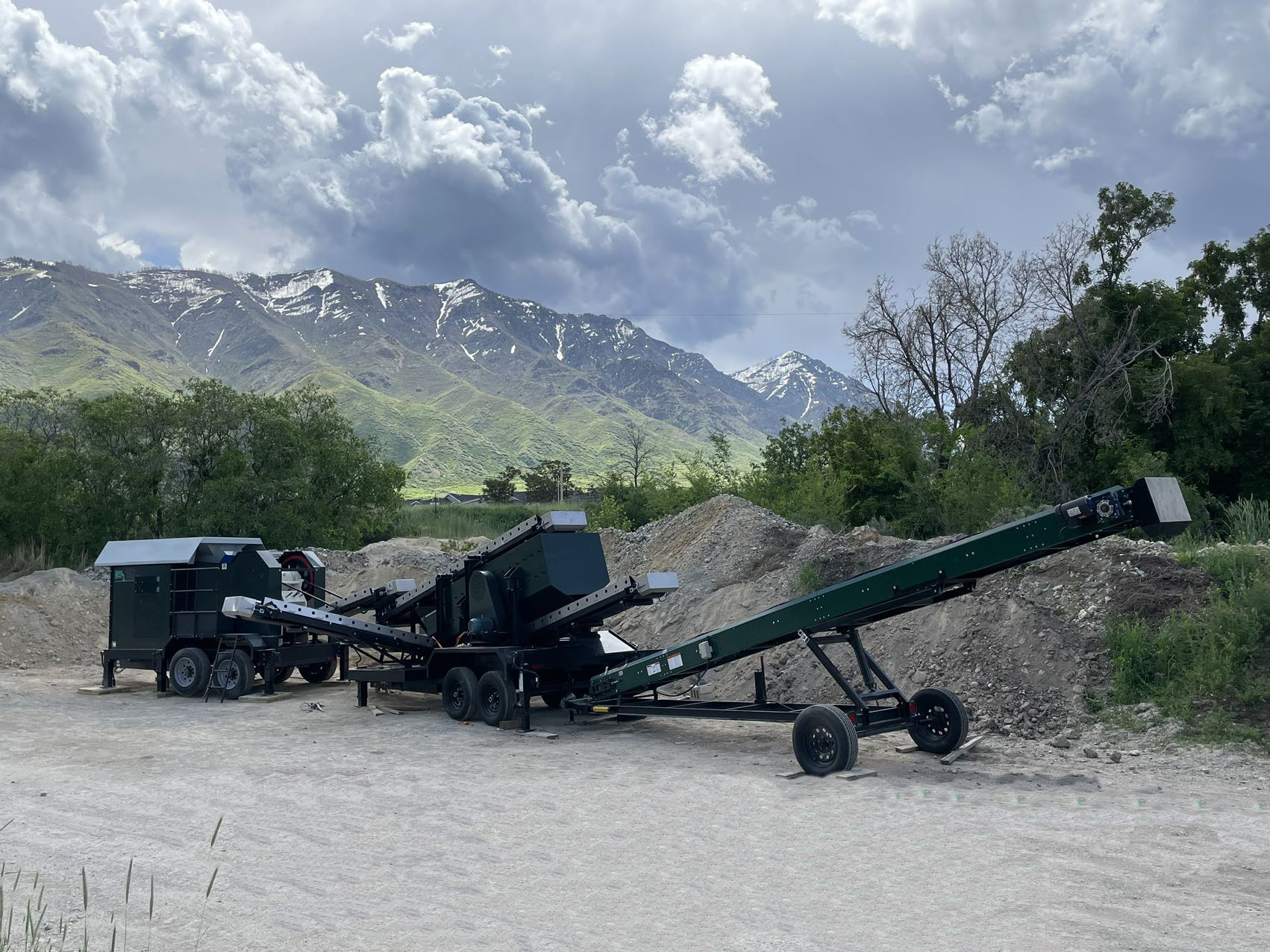
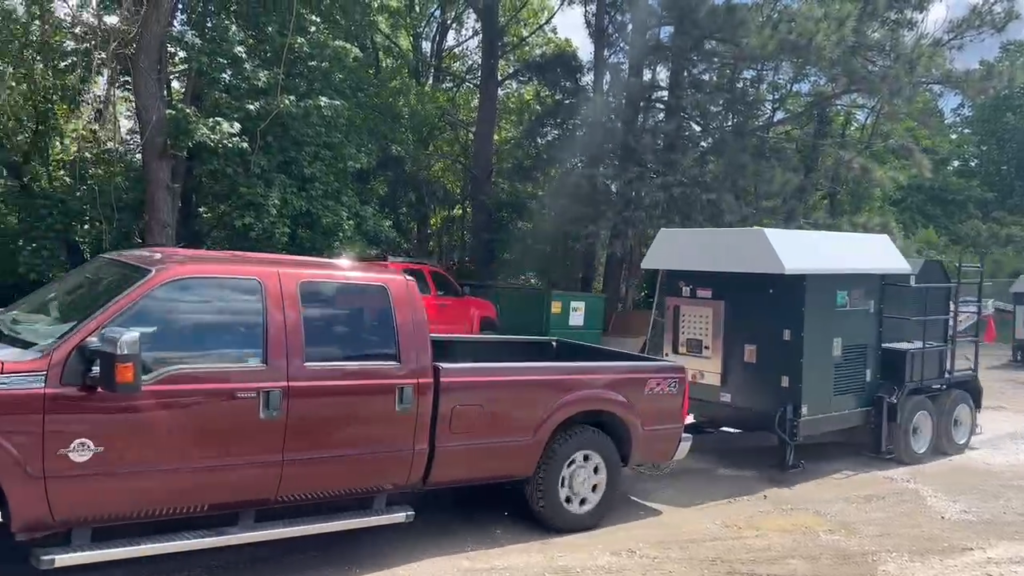
The Senya 5 uses a customer USA-made, VIN-certified, titled trailer chassis for easy transport and mobility. Built on heavy duty eight lug rims and 16 ply tires rated to 70 mph, these machines are meant to be mobile!
Need to reposition on-site?
Simply hook the pintle ring with your skid steer bucket corner tooth and move the crusher wherever needed. The tongue weight on the Senya 5 is less than 2k lbs., it’s easily moved by even the smallest loader.
Simple. Fast. Reliable. HIGHLY MOBILE AND LESS EXPENSIVE.
Why a Stacker Conveyor Changes Everything
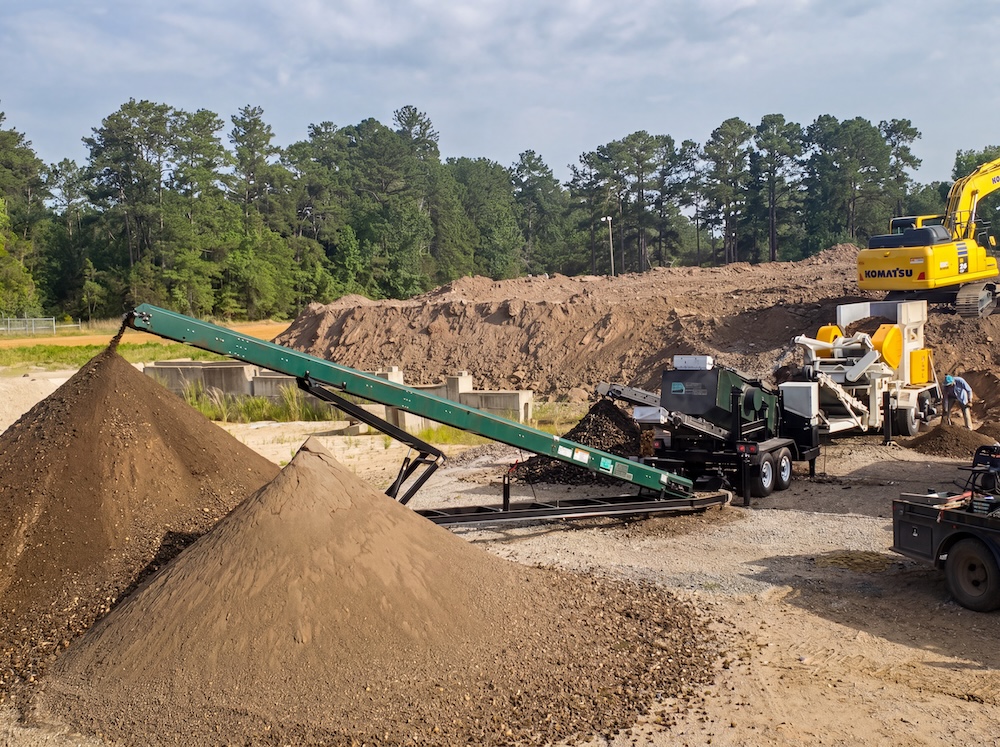
Adding a stacker conveyor can dramatically increase production efficiency.
The Senya 5 can crush a skid steer bucket of material in approximately one minute. The discharge conveyors on the Senya 5 and corresponding SP1 Screen Plant are approximately 6′. With the production rates of the Senya 5, after 5-6 skid steer buckets the material needs to be cleared and moved. You can quickly see where you could easily spend over half you time moving material instead of crushing.
Without a conveyor:
- Material piles build quickly
- Operators must stop crushing to move piles
- Loader time increases significantly
- machinery operation and maintenance costs increase dramatically
The Senya S2418DOT Micro Conveyor solves this problem.
Benefits include:
- Nearly 15’6″ stacking height
- Radial yarding capability
- Minimal material handling
- Reduced loader wear
- Continuous crushing operation
The stacker plugs directly into the crusher power source, eliminating the need for separate engines or additional maintenance systems.
With the radial yard wheel system, operators can quickly swing the conveyor to start new stockpiles without relocating the crushing setup.
That means:
- Less downtime
- Less rehandling
- More tons per hour
- More profit
Experience and Fine-Tuning Matter
Every crushing setup is different.
Material type, moisture, loader size, site layout, and operator technique all influence production.
The good news is that Senya operators quickly learn how to optimize their setup and maximize efficiency.
Small adjustments can create massive improvements in profitability.
The Bottom Line
At the end of the day, crushing equipment exists for one reason:
To make money.
Maximizing production with your Senya Crusher directly impacts:
- Revenue
- Profit margins
- Fuel costs
- Labor efficiency
- Equipment wear
- Job completion times
With proper setup, proper feeding techniques, and optimized material flow, your Senya MICRO Plant can deliver exceptional production and profitability.
If you have questions about maximizing your setup, don’t hesitate to contact the team at Senya Crushers. We work closely with our customers every day and are always happy to share proven techniques that help operators succeed.