 Setup & Service Videos

 (919) 323-4830

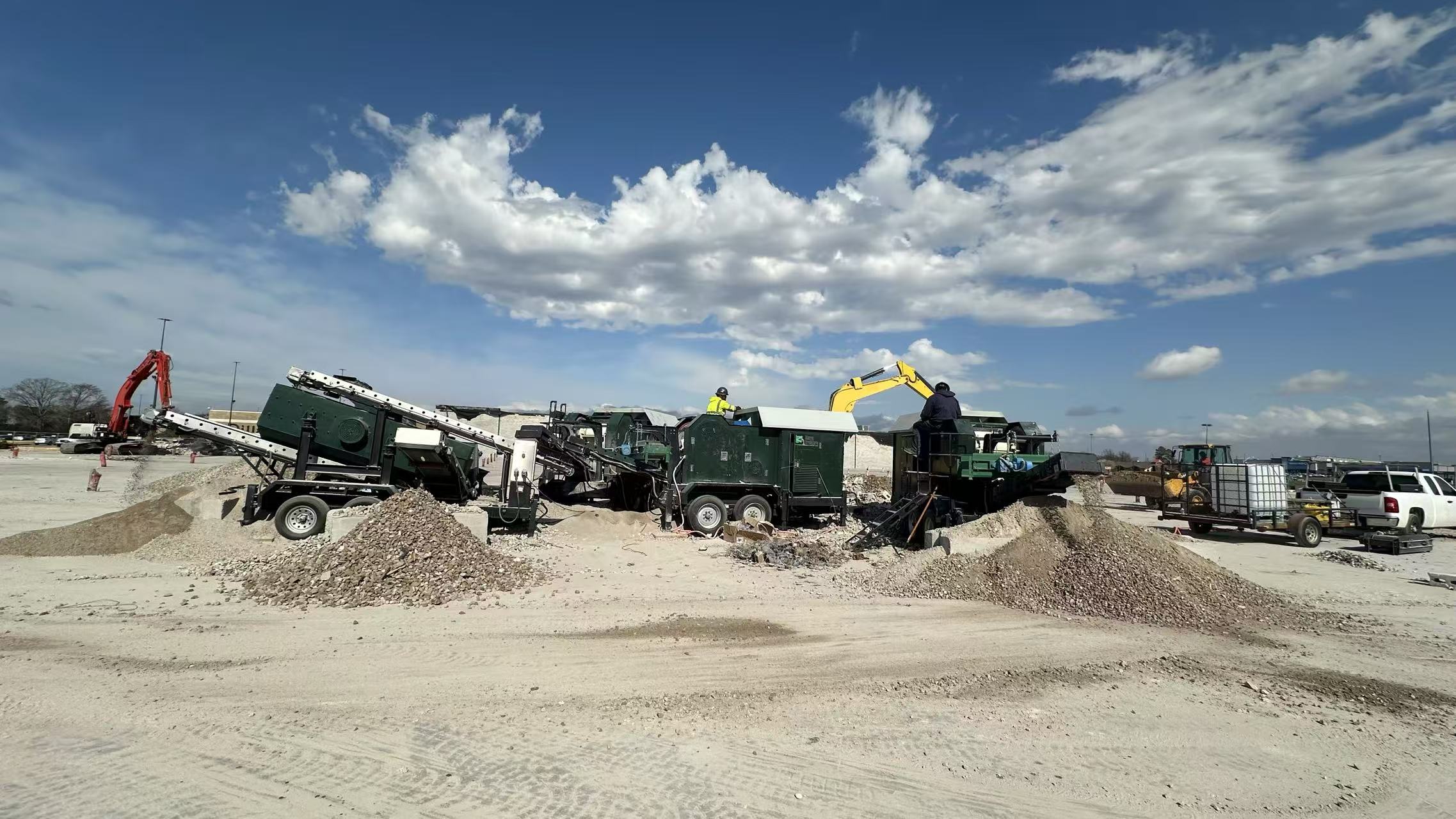
For contractors, recyclers, and aggregate producers, one of the most common equipment decisions is whether to invest in a portable rock crusher or build a fixed crushing plant.
At first glance, a stationary plant can appear cheaper because the base jaw crusher often costs less. But when you factor in the full system including foundations, conveyors, infrastructure, and installation, the economics often shift.
For many operators today, portable crushing equipment like Senya Crushers provides the best combination of flexibility, mobility, and return on investment.
Below we break down the differences between a mobile rock crusher and a traditional stationary plant.
What Is a Fixed Crushing Plant?
A fixed crushing plant is a permanent installation where material is processed in one location. These plants are typically used in large quarries or long term aggregate operations.
A typical stationary crushing setup includes:
- Primary crusher hopper
- Primary Crusher feeder
- Jaw crusher
- Discharge conveyors
- Screen plant
- Recycle conveyors
- Secondary crusher
- Stacker conveyors for finished aggregate
These plants often require a footprint of 100 ft × 200 ft (roughly half an acre) and can produce the in demand multiple aggregate sizes such as:
- ¾ inch minus material
- 1–1.5 inch aggregate
- 2″-5″ Oversize material for recirculation
A major challenge to large jaw opening stationary systems is that the larger jaw opening and tons per hour advantage is largely offset but the output size the larger jaw can produce on the first run of material.
In this example of a standard jaw that applies to most every jaw crusher, the first run can only produce material down to 2″-5″. To get the primary marketable and usable sizes, the material must be rerun multiple times significantly adding to the equipment costs as well as the operation and maintenance costs.
Many people overlook the cost of a second crusher as they don’t realize a second final crusher is actually the more efficient long-term solution as recycling the material can drive operation and maintenance costs through the roof.
While effective for large scale operations, stationary plants require significant infrastructure and machinery before production of valuable sized material can begin.
Real Cost of a Stationary Rock Crushing Plant
A recent estimate for a stationary crushing system included a 150 TPH jaw crusher (24″ × 36″).
Equipment Cost
- Primary crusher hopper: $31.7K
- Primary Crusher feeder $28.5K
- Jaw crusher: $83.5K
- Discharge conveyor: $14.8K
- Secondary Jaw crusher: $55k
- Secondary Jaw Hopper: $18.6K
- Secondary Jaw Feeder: $12.5K
- Screen Plant: $35.6K
- Oversize Recycle Conveyor: $12.8K
- Stacker conveyors for finished aggregate: $12.8K
- Stacker conveyors for finished aggregate: $12.8K
- Electrical Control System: $17.5K
Approximately $268,000 for the crushing machinery and related equipment.
Total Installed Cost
Once you add:
- Concrete Foundation: $7.5K
- Steel Frame/Structural Supports: $20K
- Installation Labor/Approx. 1 month commission time: $25K
- Site Preparation: $3K
The total project cost climbs to around $324,000.
A key takeaway is that the jaw crusher itself is only a small part of the investment. The infrastructure and other necessary components required to support a fixed plant can significantly increase costs.
Many people research the cost of just the jaw crusher alone not realizing all of the additional costs and components that must be included.
Further, fine tuning the equipment to properly and efficiently work together adds to the cost as little “tunings” and necessary additions add up as well. Down time when the system isn’t properly configured and perfected, yet can be extremely frustrating, not to mention causing costly delays.
The Alternative: Portable Crushing with Senya Crushers
Now compare that same production capability with a portable crusher setup from Senya Crushers.
Instead of building an entire permanent plant, operators can deploy a mobile crushing system that performs the same core functions while remaining completely transportable.
Senya crushers are designed specifically for contractors, recyclers, and small-to-mid-size aggregate producers who want the capability of a full crushing plant without the permanent infrastructure.
For example:
Senya Portable Jaw Crushers
Several Senya models deliver production levels comparable to stationary systems.
Senya 6 Portable Jaw Crusher and Screen Plant Line
- Up to 150 tons per hour capacity
- Capable of processing 500–800 tons per day
- Produces multiple aggregate sizes from ¾” to 4”
See it in action here:
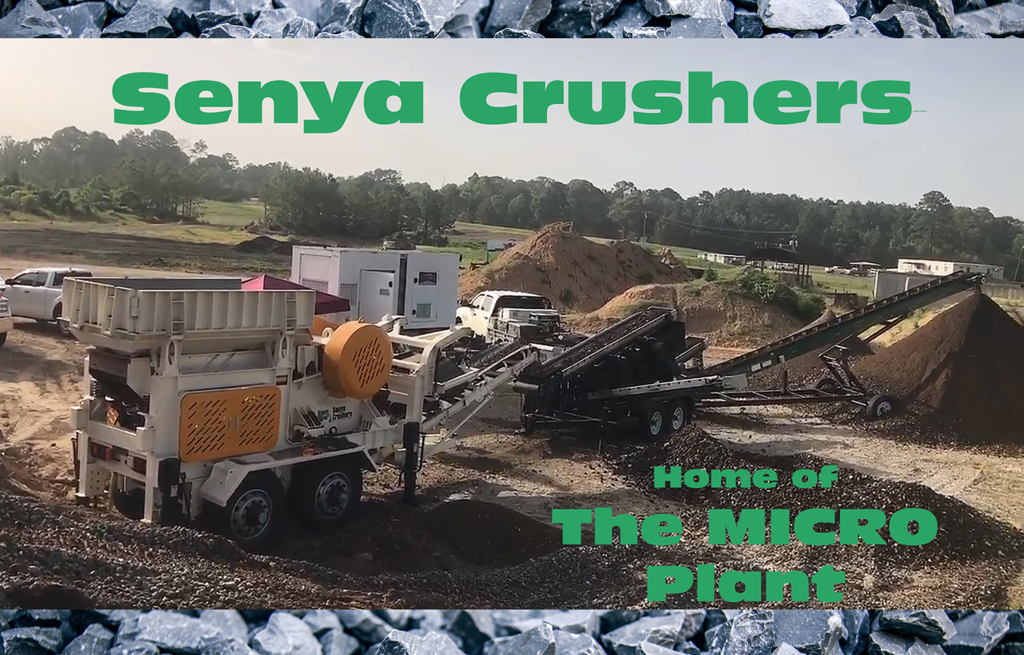
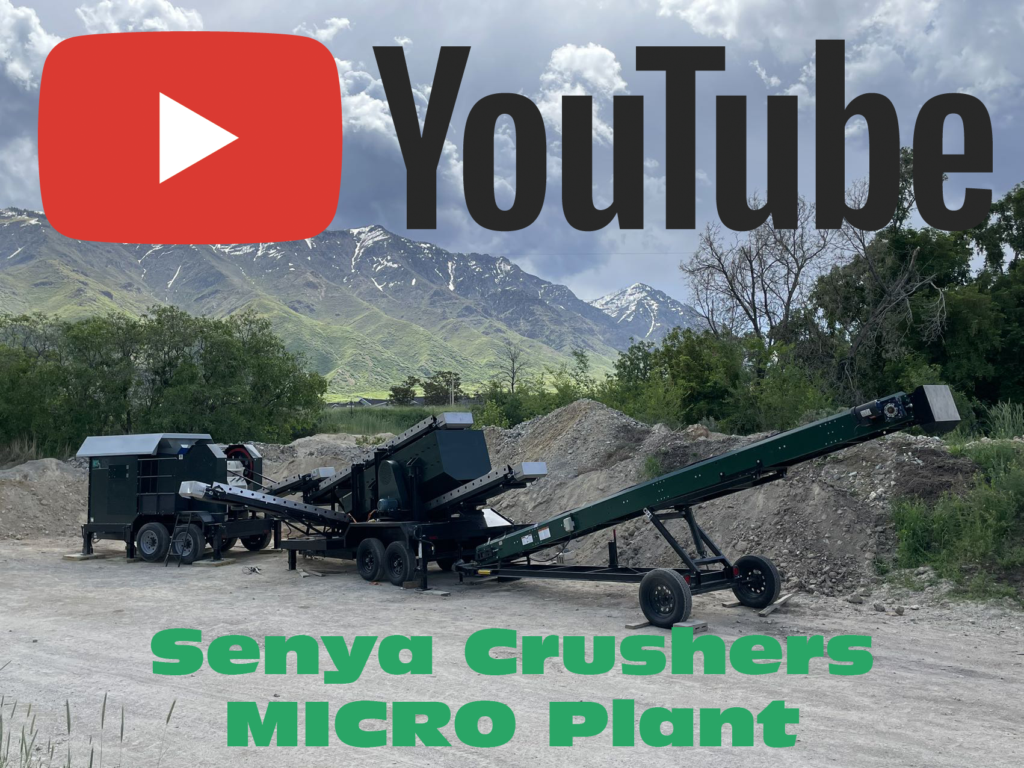
When paired with the Senya Micro Screen Plant and stacking conveyors, the system functions as a complete portable aggregate processing plant.
Senya 5 Portable Jaw Crusher and Screen Plant Line
This option gives significantly less tons per hour, but the line can be scaled with multiple setups to get the desired capacity. You could run two Senya 5’s feeding a single screen plant for example getting significant capacity at an extremely reasonable cost to get into the crushing business.
- Up to 50 tons per hour capacity
- Capable of processing 200–400 tons per day
- Produces multiple aggregate sizes from 3/8” to 4”
When paired with the Senya Micro Screen Plant and stacking conveyors, the system functions as a complete portable aggregate processing plant as well, AND CAN BE PULLED BY A PICKUP TRUCK!
See it in action here:
The Cost Comparison That Surprises Most Buyers
When comparing systems with roughly similar crushing capacity, the numbers often look like this:
Stationary Crushing Plant
- Jaw crusher system: ~$268,000
- Installation and infrastructure: ~$50,000+
- Total project cost: roughly $324,000
Portable Crushing Systems
Comparable mobile crushers such as the Senya 5 or Senya 6 provide:
- 50–150 TPH crushing capacity
- Complete mobile operation
- Transport by semi or even 3/4 ton pickups on the Senya 5 line
Typical investment: $28000 for Senya 5 50 tph MICRO Plant, $400K for Senya 6 130-150 tph MICRO Plant.
At first glance, the comparable tons per hour portable option may appear slightly more expensive, but the difference is usually only about 15–20% once everything is included. That small difference buys something stationary plants can’t provide: mobility.
Why Mobility Changes the Economics
Instead of hauling material long distances, operators bring the crusher directly to the jobsite. Concrete demolition, rock excavation, and asphalt removal can all be crushed right where 0he material is produced.
The benefits quickly add up:
- Lower hauling costs
- Faster project timelines
- Immediate reuse of crushed material
- Ability to move the crusher to the next job
- Minimal infrastructure
For contractors especially, this mobility creates new revenue opportunities from project to project. Whether for concrete recycling, demolition projects, or aggregate production, Senya portable crushers provide a powerful and flexible solution for on site crushing.
When a Fixed Crushing Plant Makes Sense
Stationary crushing plants are still useful in certain situations.
These systems are typically best suited for:
- Large aggregate quarries
- Permanent manufacturing facilities
- Extremely high production environments
- Long term mining operations
In these cases, the infrastructure investment can be justified.
However, for contractors, recyclers, and many independent material producers, portable crushing equipment offers far greater operational flexibility.

Learn More About Senya Portable Crushers
If you are exploring portable rock crushing equipment or comparing options between a mobile crusher and a fixed plant, the Senya Crushers team can help you find the right solution.
Contact Senya Crushers today to learn how a portable crusher can transform your operation.