 Setup & Service Videos

 (919) 323-4830

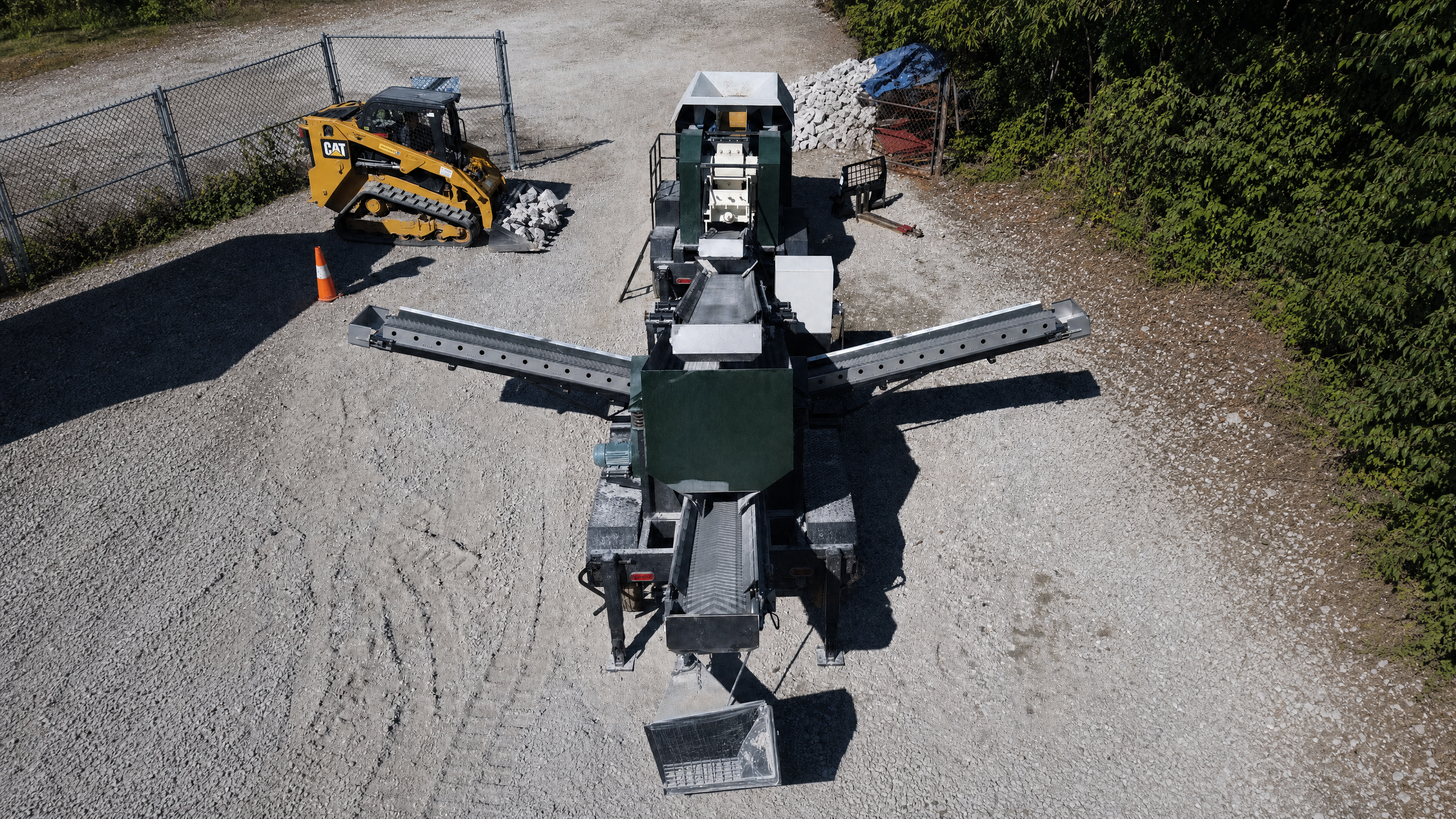
Not all compact crushers are built the same.
On paper, two machines may advertise similar production numbers, comparable feed openings, and the ability to process concrete, rock, and other materials. But once you look beyond the basic specs, there can be major differences in crushing power, machine design, production capability, and price.
For contractors, recyclers, and aggregate producers, those differences matter.
A crusher is not just another piece of equipment. It needs to handle tough material, maintain consistent production, and make enough money to justify the investment.
That is where Senya Crushers separates itself from our closest competitor.
Crushing Power Starts With the Flywheels
One of the biggest differences between comparable crushing systems is something many buyers may not think to compare at first: flywheel weight.
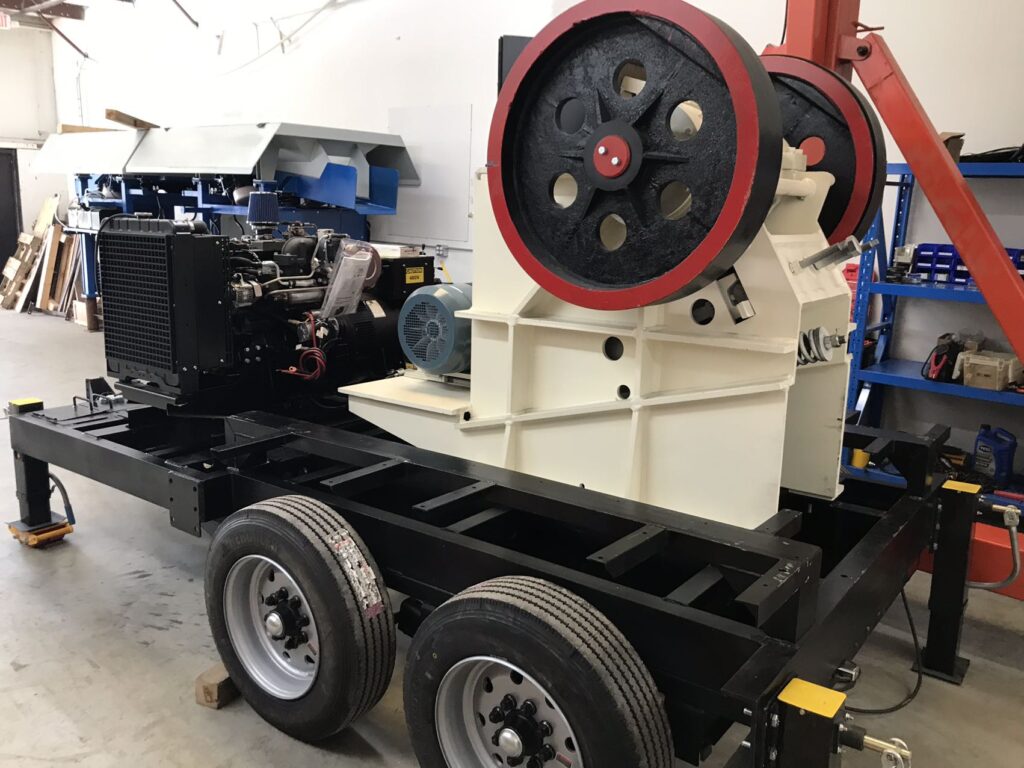
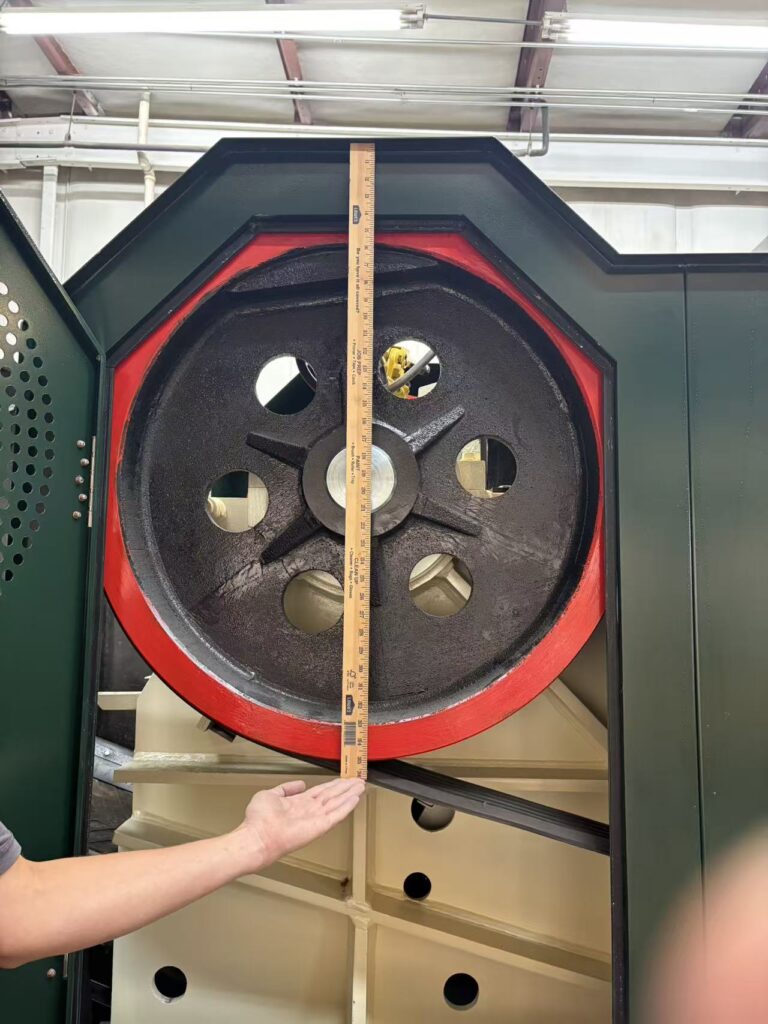
Senya crushers are engineered with approximately 600-pound flywheels, compared with roughly 200-pound flywheels found on comparable equipment from our closest competitor.
That is about three times the flywheel mass.
Why does that matter?
Heavy flywheels store rotational energy and help deliver the crushing force needed to process tougher material efficiently. More stored energy helps the crusher maintain momentum when hard material enters the jaw instead of relying solely on the motor to generate crushing force with every cycle.
In real-world applications, that matters when you move beyond lightly reinforced concrete and start processing harder, denser materials.
Check out these massive flywheels:
As we like to say at Senya Crushers:
The thump is in the hump!
Concrete Is Easy. What Happens When You Hit Rock?
There are plenty of compact crushers that can process concrete.
But concrete is not the real test.
The real test comes when contractors start working with granite, river rock, native stone, dense aggregate, and other hard materials.
That is where machine design and crushing force start to separate one crusher from another.
A crusher designed primarily around lighter-duty concrete recycling may perform well under ideal conditions, but tougher material can expose the limitations of the machine quickly.
Senya Crushers takes a different approach.
Our equipment is designed around serious crushing applications so contractors can process concrete, asphalt, brick, block, rock, and other demanding materials without needing a completely different machine for every job.
The hardness of material can have a significant impact on the cost of the machinery necessary to process effectively. When our owner personally designed our MICRO Crushers, from the start he wanted hardness of material to be a non-issue. This is why our MICRO Crushers are way overbuilt in their crushing power. They can handle any hardness of material you can throw at them with ease.
Concrete, asphalt, and block all have a Moh’s hardness of around 3-3.5. Native stone, blue stone, granite, river rock and other dense rock have a Moh’s hardness of around 8-8.5, over twice the hardness of traditional construction demo material. We run demos of our machinery crushing hard granite rip rap to show off our massive crushing power. Check out the video of it crushing at close to 80 tph on our 50 tph rated Senya 5. We are not going to promise you will get this throughput every day, but if you aren’t getting at least 40 tph at a very minimum, there are things you can do to get to that level easily. Here’s the video:
Be very wary of other crusher’s claims of tons per hour. Unfortunately, the industry is very prone to “exaggeration”. When we saw the tons per hour we were getting out of the new Senya 5 jaw technology, we considered rating it as a higher tons per hour machine but our owner insisted on keeping it at 50 tph. He said he wants to under promise and overdeliver! From the very top, this is how we do things at Senya Crushers!
So all of this is the thinking behind one of our favorite sayings:
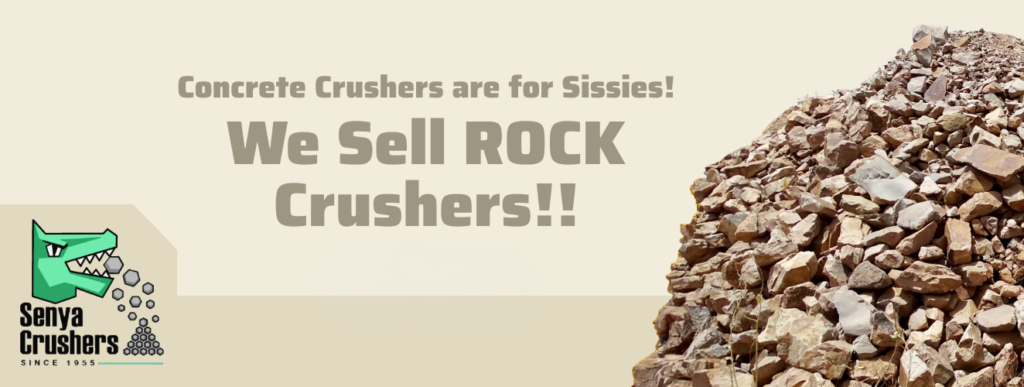
It is not just about having a catchy line. It reflects how the equipment is built. It reflects the long-term efficiency, productivity, and reliability of the crushing machinery.
Tons Per Hour Only Tell Part of the Story
Production capacity is one of the first specifications buyers compare when shopping for a crusher.
And it should be.
The number of tons you can process per hour directly affects labor costs, equipment utilization, project timelines, and most importantly, profitability.
But advertised tons-per-hour figures should always be evaluated alongside the machine producing them.
Two crushers may appear similar based on projected production capacity, but the equipment required to achieve that production can vary significantly in both design and cost.
When comparing crushers, ask:
- What type of material was used to establish the advertised production rate?
- How hard was that material?
- What was the feed size?
- What finished product size was being produced?
- How consistently can the machine maintain that production?
- What support equipment is required?
- How much does the complete crushing system cost?
Those questions tell you far more about real-world production than a single TPH number on a spec sheet.
Similar Production Shouldn’t Cost $65,000 More!
This is where the comparison gets especially interesting.
A supposedly comparable sized crusher from our closest legitimate competitor can cost approximately $65,000 more while targeting a similar tons-per-hour production range. Include a screen plant and stacker conveyor and the difference can balloon to close to $150K! Our direct to user business model gives tremendous value eliminating 25-40% dealer margins.
Yet these competitors are not in the same universe as our machinery’s crushing power and diesel over electric technologies, TRIPLE/TRIPLE air filtration (dual cartridge + centrifugal prefilters X 3, all with airflow sensors for the ultimate in protection), upgrade options (magnetic metals removal conveyor, dust suppression, step down transformer for onsite 220v or 110v power) , TechDirectLink telemetry technology, not to mention being the only MICRO Crusher in the world being built on a USA made, titled, and VIN’d chassis with mobility a monster advantage!
In short, that is a substantial difference in price and technologies before you crush a single ton.
For contractors evaluating return on investment, the math matters.
If two machines are targeting similar production but one requires tens of thousands of dollars more upfront, that higher equipment cost has to be recovered somewhere.
That extra $65,000 could instead go toward:
- A screen plant
- Conveyors
- A skid steer or loader
- Trucks and support equipment
- Labor
- Expanding your crushing operation
Or it can simply stay in your business. OR your bank account!
The most expensive crusher is not automatically the most productive or profitable crusher. On the other hand, beware of cheaper crushers where the up-front costs may be lower, but long-term costs and lower or no profitability can add up quickly and dramatically. There are many cheap imports popping up with the huge demand for small and portable crushers. Be very careful in evaluating these machines.
The better question is:
How much crushing capability are you getting for every dollar invested?
Don’t Compare the Crusher Alone
Another mistake buyers make is comparing individual crushers without looking at the complete material-processing operation.
Crushing is only one part of the process.
You still need to screen the material, separate it, move it, and create a usable finished product.
That is why Senya Crushers developed the MICRO Plant concept.
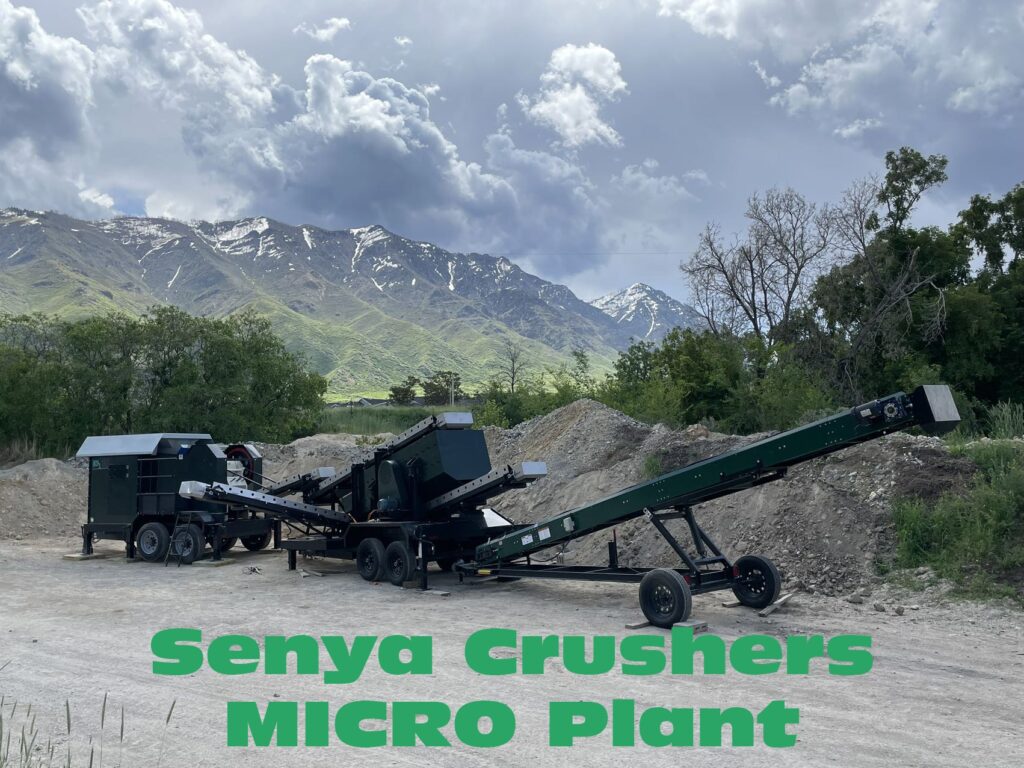
By pairing a MICRO Crusher with screening and conveying equipment, contractors can create a complete portable aggregate processing operation that works together as one system.
Senya’s SP1 MICRO Screen plant can pay for itself very quickly as screened and graded to size material can easily be worth $10-12 more per ton! Many jobs and applications require size and fines specs to do the job the material should.
The Stacker Conveyors also quickly pay for themselves. With the Senya 5 crushing a skid steer bucket in just about a minute, it only takes a half dozen or so buckets before the material is up to the 5-6′ conveyor discharge height on the crusher or screen plant. Then you have to move material and quickly end up spending more time moving material then actually crushing. The stacker conveyor can give you a nice 15′ pile, and then utilizing the radial yard feature, simply move the conveyor in an arc and restart a new pile without having to reposition the entire setup or simply load directly to a truck.
Think of it all as a mini quarry on wheels. And it all runs off the crusher power plant so there are no additional engine operation and maintenance costs. Every component is designed to work together seamlessly and extremely efficiently. The entire plant runs on about a gallon of diesel per hour, less than $50/day as your main daily operation and maintenance cost. Hit the jaw bearings with a few pumps of grease every morning, fill the 13-gallon fuel tank, and get to crushing and making money.
Instead of hauling demolition material away, paying disposal fees, purchasing replacement aggregate, and hauling that material back to the site, you can process what you already have on site.
Crush it.
Screen it.
Reuse it.
Or sell it.
That is where owning the right crushing system can completely change the economics of a job in a very dramatic way.
The Real Cost of Owning a Crusher
Purchase price matters, but it is only one part of the equation.
The real value of a crusher comes from what it allows your business to stop paying for and what it allows you to start producing.
Owning crushing equipment can help reduce or eliminate costs associated with:
- Hauling material off-site
- Landfill and tipping fees
- Purchasing replacement aggregate
- Aggregate delivery
- Outside crushing contractors
- Time lost waiting on material
At the same time, processed material can potentially be reused on-site or turned into a product with resale value.
The faster you can turn material into usable aggregate, and the lower your initial equipment investment, the stronger your potential return.
It is simple math. At minimal volumes in demo disposal and aggregate purchases (4-5 truckloads a week even) at average market rates, our MICRO Crushers can pay for themselves in a few short months even. Do your market research in your area, and plug in your own numbers to see exactly how much. See our cashflow calculator here which even includes the IRS Section 179 100% tax deduction saving up to 1/3 the cost of the equipment:
Cashflow Calculator For MICRO Crushers
Your crusher should be making you money. A LOT of money.
Check out an average small crushing job ROI Analysis here to see the simple math:
Is On-Site Crushing Profitable? $8-$12K+ per day: Cost Breakdown & ROI Analysis
Look Beyond the Spec Sheet
Compact crushing equipment gives contractors more options than ever before.
But similar-looking machines are not necessarily comparable machines.
Flywheel mass matters.
Crushing power matters.
Production matters.
The ability to handle difficult material matters.
And price absolutely matters.
When you compare Senya Crushers with our closest competitor, the biggest difference is not one individual specification. It is the amount of crushing capability you receive for the investment.
Senya Crushers is built around a straightforward idea:
Give contractors serious rock-crushing power without forcing them into a massive capital investment to get it.
Because if you are going to invest in a crusher, it should be able to do more than handle easy concrete.
It should be ready when the hard stuff shows up.
Don’t forget the service and parts factor
Last and absolutely not least is the service you can expect from your crusher supplier. Crushing is a very rough business, it’s like getting hit over the head with a hammer all day every day. Even with the best technologies and design of machinery, things are going to happen and parts and service will be needed.
Senya Crusher’s entire business model is built on a direct relationship with the end users of our equipment. We take this relationship very seriously.
We are very proud to say we make our machinery with our own two hands right here in Raleigh, North Carolina, very proud to be MADE IN USA. But it also means all parts are right here on the shelf, and we get parts out the same day at times even. We understand when you’re on a job and are temporarily down, the urgency of getting back up in running quickly.
This is why our direct service relationship can be invaluable. There are few if any crusher manufacturers that can match our service commitment to our end users from the top on down. Our owner has been known to visit our customers on site even on his personal vacations if in the area to know our customers better. It’s doubtful any company can say that!
Ready to Compare Crushers?
Before investing in crushing equipment, compare more than advertised production numbers.
Compare the flywheels.
Compare the crushing power.
Compare the technologies and expertise.
Compare the materials each machine is built to handle.
Compare the complete system.
Compare the service.
And compare the price.
And if you can, COME SEE US and our machinery in operation!! Raleigh Durham airport has great connections if flying. We’ll pick you up in the morning, tour our shop and run some material in our demo line out back, get a good Carolina BBQ lunch answering any questions in between bites, and have you back to the airport and home that night even. We do it all the time, would LOVE to have you!!
Then decide which machine gives your business the strongest return.
Contact Senya Crushers to discuss your material, production goals, and the right MICRO Plant setup for your operation!
BE SURE TO CHECK OUT OUR NEW HOW TO START A CRUSHING BUSINESS PAGE WITH A DOZEN OR SO ARTICLES ON EVERYTHING YOU NEED TO KNOW TO BE HIGHLY SUCCESSFUL AND PROFITABLE IN THE CRUSHING BUSINESS!
THE COST OF AGGEGATE CONTINUES TO SKYROCKET…AS WE SAY AT SENYA CRUSHERS, THE BEST TIME TO GET IN THE CRUSHING BUSINESS WAS YESTERDAY!!!
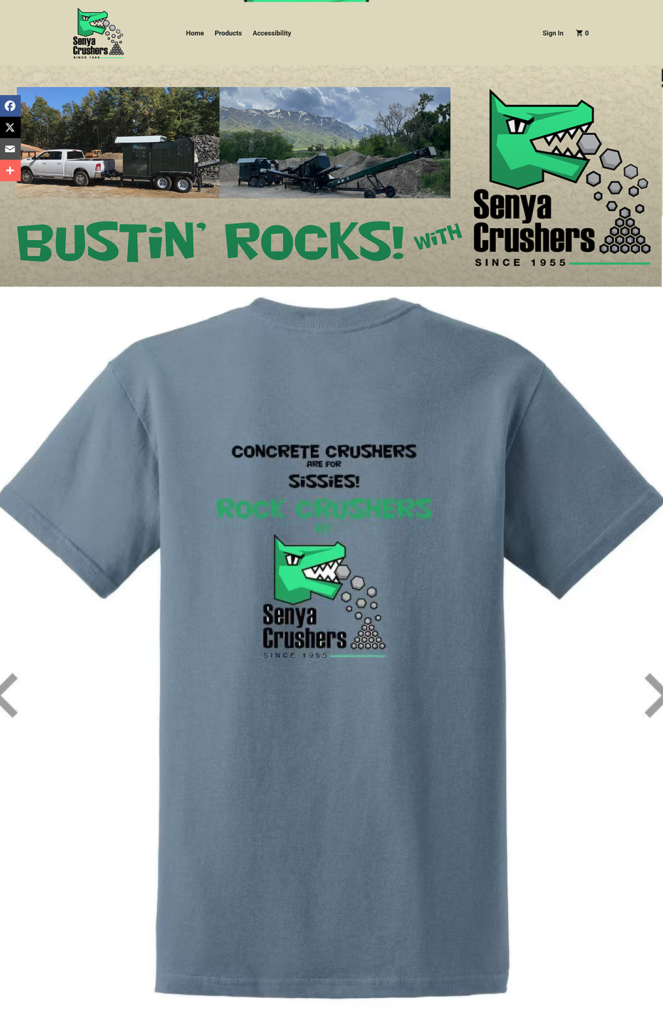
and don’t forget your t-shirt at thecrusherstore.com!!