 Setup & Service Videos

 (919) 323-4830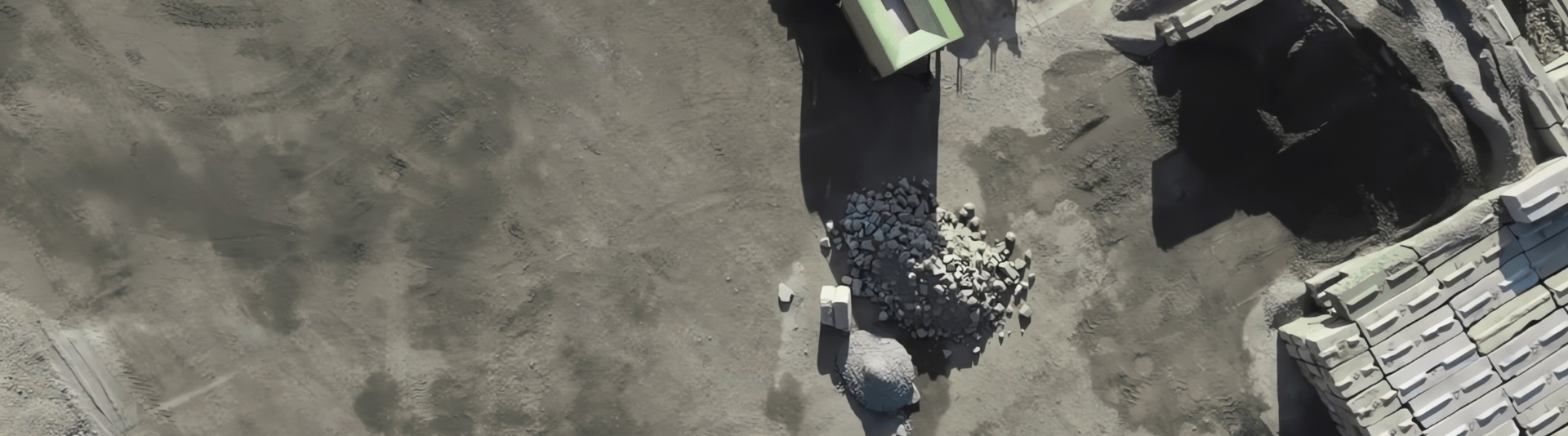

Working on a job site with an excess of rock, concrete and asphalt? Or perhaps you are a hardscape fabricator of specialty stone and you have leftover granite, marble, or soapstone. Maybe you operate a wet concrete plant that has daily waste from your washout? Having to haul away demolition at considerable expense and then paying again to haul in expensive base for your job?
You may need options for what to do with this rock “waste”, not to mention the significant expenses of hauling to and from site. If you have the feeling it’s not waste at all, you’re right. This material has the potential to help your company’s button line.
WHY PAY TO HAUL STUFF AWAY AND THEN BUY IT RIGHT BACK?????????
Key Takeaways
- Crushing on-site has an average return on investment period of less than five months at minimal volumes.
- Aggregate and hauling costs are high and continue to skyrocket when disposing of construction site waste. These costs have easily doubled over the last few years.
- Portable crushing helps job sites turn expensive waste into reusable or resalable material and eliminates your hauling costs saving hundreds of thousands of dollars at relatively small volumes. This is the case at even as much as 4-5 truckloads a week in demo disposal and aggregate purchases on both sides of the equation.
Use your own market rates and volumes to see how much you can make and save with Senya Crushers Cashflow Calculator. The numbers and dollars can be simply mind boggling at minimal volumes! It’s simple math!!!
What is Portable Crushing?
Portable crushing is the process of using mobile, track-mounted, or trailer-mounted machinery to process raw materials like concrete, asphalt, or stone directly where they are generated.
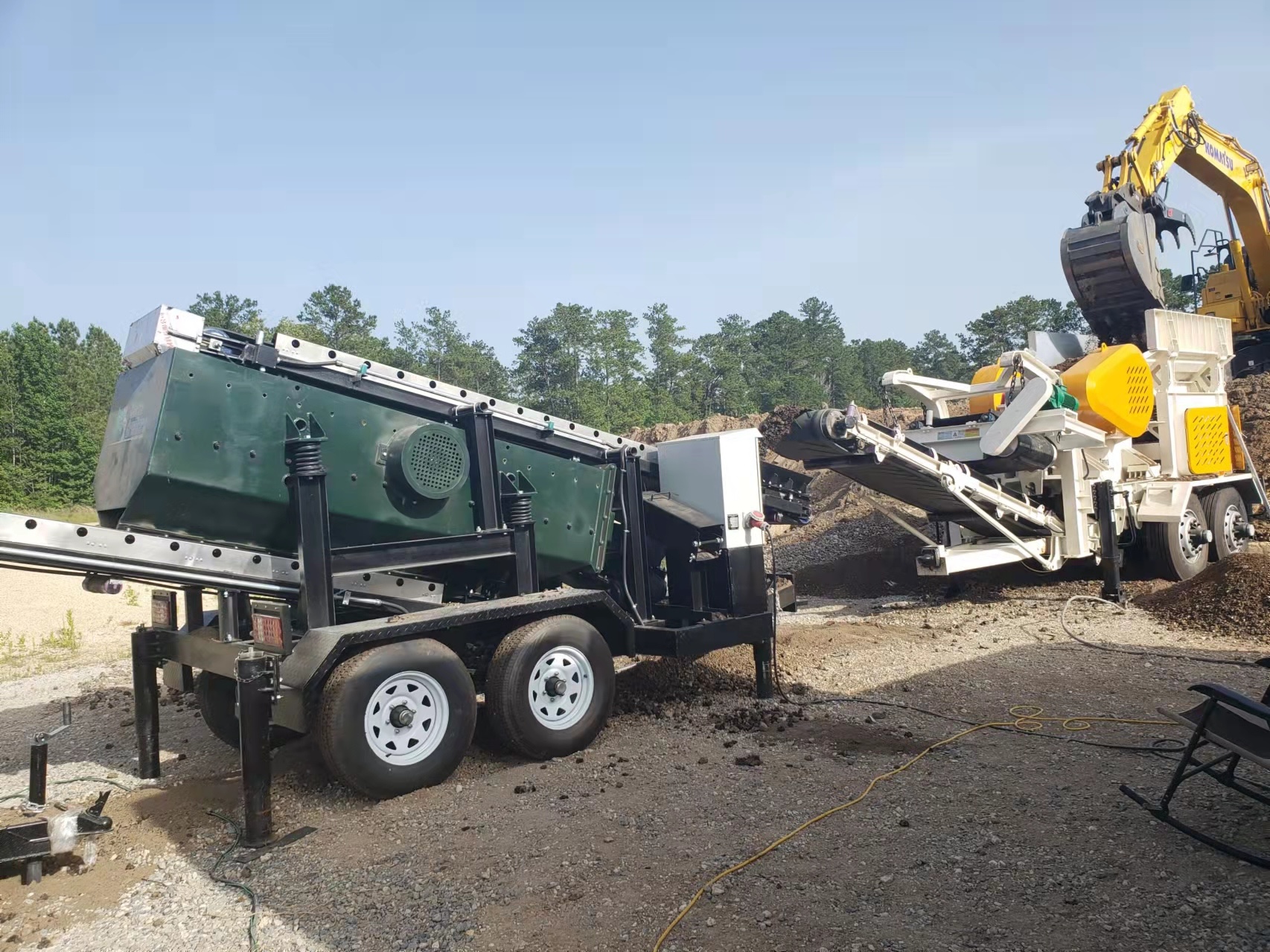
Modern units, like our Senya Micro Crushers, use high-strength jaw plates to crush any unwanted materials into graded aggregate. Unlike a stationary rock crushing plant, our portable crushers built on a USA made, titled, and VIN’d trailer can be hauled to and from sites using a standard pickup truck.
How Does On-Site Rock Crushing Generate Profit?
On jobsites where you need to remove and dispose of rock, traditional methods often feel like being charged twice — first to haul it away, then to dump it. Essentially, this means you are paying for the disposal of crushed rock.
And many contractors will pay for crushed rock. If it feels like you are throwing money away, by paying to get rid of excess materials, it’s because you are.
What to Do with Crushed Rock
With portable crushing, you can turn the materials into profit in a two different ways:
1. Crush and re-use materials
If your job-site has areas that need crushed materials, like sub-bases for roads or driveways, backfill for foundations or retaining walls, utility trench bedding, or erosion control measures, you no longer need to purchase materials. A penny saved is a penny earned as they say.
In this business, it’s more like a ton of $$$ saved is a ton of $$$ earned!
We like to say that because we are recycling material, we may be the “greenest” people you’ll ever meet but……
We ain’t huggin’ trees, WE GOIN’ TO THE BANK!!!!!!
2. Crush and sell materials
If you don’t need the materials, you can sell it to contractors who do. Now, instead of paying someone to take your rock away, you are making money by crushing this material for resale. Contractors will pay you to dump material, and you then sell it right back to them! NOW THAT’S A GOOD BUSINESS MODEL!!
3. Crush and store materials
If you commonly have jobs where crushed rock is needed, you can store it for use later. While this isn’t quite as convenient as the other two options, it will still save you a boatload of money in the long run.
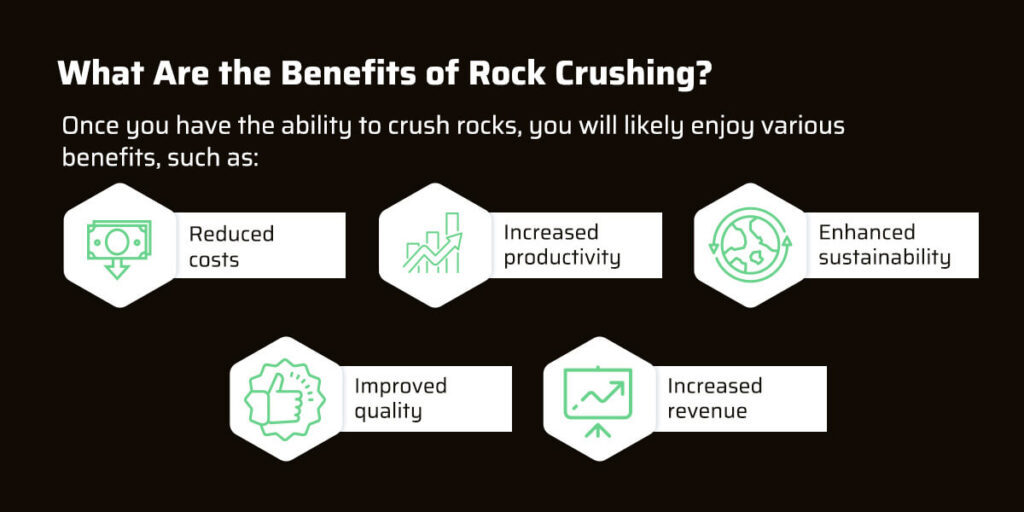
Portable crushing has many benefits, and the best of all is it’s ability to cut costs.
Cost Breakdown of On-Site Crushing
The most expensive part of a portable crusher isn’t the purchase price, it’s the opportunity cost of not owning one. Every day you wait is another day you’re paying a landfill to take your future profits.
THE BEST DAY TO START CRUSHING FOR YOURSELF IS YESTERDAY!
Initial Investment
The sticker price of a portable crusher doesn’t always tell the full story. For most contractors, tax incentives and financing can make the initial outlay of funds substantially lower.
However, the initial investment of a portable rock crusher isn’t a small one. A standard entry-level crusher typically starts around $150-$210K for a crusher that can do any real work and is basically not a toy. Large units traditionally start at A$350-$400K or so and go up in price quickly.
It’s crucial to also consider that with the section 179 tax deduction businesses can deduct 100% of the machine’s cost in its first year, resulting in savings of approximately 30-35%.
When comparing the monthly installment loan payment to the money you spend on your stone bill each month, it doesn’t take but only 5-6 truckloads per month of material you produce yourself to be in a positive cashflow situation!
Ongoing Operating Costs
For ongoing use, costs are measured per ton or per hour.
Traditional portable rock crushers are essentially direct drive engines and giant hydraulic pumps on tracks, which must run at high RPMs and generate a lot of heat and friction. These machines are more expensive long-term with operating costs for hydraulic fluid, high-pressure hoses, and altered performance due to variable conditions like temperature. Maintaining these old school systems are the reason crushing has the reputation of a high operation and maintenance cost business. Traditionally, it has been true.
On the other hand, electric-over-diesel systems like Senya Crushers offer a hugely more energy efficient crushing method that’s less considerably less expensive to run and much easier to maintain over time. There is a reason all of the larger crusher manufacturers are finally making the move to the diesel of electric configuration Senya Crushers has used from the very start.
Senya Crushers Senya 5 is able to be run all day for less than $50 in fuel, averaging about a gallon per hour even with corresponding the SP1 Screen plant and the S2418 Stacker conveyor running off the same power plant in your crusher. There are no additional maintenance costs for power plants to run the additional pieces of equipment. Hit the jaw bearings with a few pumps of grease, fill up the 13-gallon fuel tank, and that’s you’re daily operation and maintenance costs with our cutting-edge diesel over electric technologies. Even our exclusive cutting edge chromium/manganese blend jaw wear plates average less than fifty cents per ton as the only significant cost of non-warrantied parts.
OUR DAILY OPERATION COSTS OF OUR ENTIRE MICRO PLANT ARE LITERALLY NEGLIGIBLE!!
We’ve simply removed the top causes of downtimes and the top expenses.
ROI of On-Site Rock Crushing: The Simple Math
Below is an average small crushing job scenario — consider a job site that has 1000 tons of concrete demolition. These small jobs are where the real money to be in crushing happens if you have a small portable crushing operation.
For a traditional scenario where concrete material is disposed of, here are the costs:
- Disposal/Tipping Fees ($75/truckload): $3750
- Trucking/Hauling ($10/ton minimum): $10,000
- Buying New Material if needed or to use elsewhere ($35/ton minimum delivered): $35,000
- Total job expense of demo disposal and value of material: $48,750
With a small crush on site operation, you could easily do this job in 5 working days, 4 when you get at your efficiency. You could offer to save the contractor over $13K for the job and only charge him $35K.
THATS $7K PER DAY AT A VERY MINIMUM you can charge for your crushing services!!
GET GOOD (see our article How to Maximize Tons Per Hour and Profitability with Your Senya Crusher) AND DO THE JOB IN 4 DAYS AND THAT’S $8750 PER DAY!!!
In areas where these costs can almost double, it’s just simple math to see where a mobile crush on site operation crushing 200-400 tons per day could even earn up to $10-12K per day! Even rental companies renting skid steer or excavator bucket crushers lucky to get 5-10 tph are fetching $4k per day and only with the ability to crush over several days what a Senya 5 could do in a few short hours!
FAQs About Portable Crushing
Can portable crushers handle rebar? Yes, jaw crushers are designed for reinforced concrete, and magnets pull the metal out. The Senya MICRO Crushers has magnetic metals removal conveyors as an option, but they really are a necessity as it’s inevitable that you will encounter a job with wire and rebar. The Senya Crushers magnetic metals removal conveyor simply pulls the metal out of the material as it comes out the discharge conveyor and automatically throws it in a pile to the side.
Is it loud? Modern electric-drive units are significantly quieter than older hydraulic models, making them “neighborhood-friendly.” The Senya 5 Micro plant operates at around only 90 decibels 10 feet from the crusher, about the loudness of a decent size lawnmower but at a much lower pitch.
What size is the finished product? Most units have adjustable jaws to produce anything from fine to coarse rock. A major advantage of the Senya 5 is it’s ability to produce material from 3″ down to “.75 on the first run and still at significant tons per hour. You can even tighten the jaws up to almost touching on the throw stroke and get as small as pea gravel down to 3/8” or so, and still get 20-25 tons per hour even crushing at that very small size!
Do I need a special license? Most micro crushers are considered mobile equipment and don’t require the complex permits of a stationary quarry. The low noise levels and even the dust suppression system can also allow operation without special permitting. We always suggest checking your local requirements as they can vary widely from place to place.
Get in Touch with Senya Crushers
If you are ready to turn leftover material into a new revenue stream, transform your view business, or start a new crush on-site business altogether check out our selection of micro-crushers here.
MORE IMPORTANTLY, VISIT OUR “HOW TO START A CRUSHING BUSINESS PAGE”, always available under our resources tab at the top of the Senya Crushers homepage.
This page is a dozen or so articles on EVERYTHING YOU NEED TO KNOW TO START A CRUSHING BUSINESS! It’s a true bible to how to get started in the crushing business with articles such as how to quote jobs, the most profitable niches to target, the best selling sizes of material, how to market your new crushing business and many more.
We at Senya crushers are as much business consultants as we are machinery manufacturers. We love sharing how others are literally CRU$HING it simply “Bustin’ Rocks”. This Spring alone we have been proud to hear how three of our past customers, frustrated with competition willing to work for less just for cashflow, low profit margins, and tremendously competitive bids have decide to sell off their existing businesses to go 100% into crushing simply because of the huge money to be made with almost zero competition of a small portable crushing operation.
One was a trucker hauling demo off site and aggregate back to the same guys and realizing he could do this himself once he found us. Another was a plumber, and the last was a General Contractor. All had been in business many years and realized the tremendous opportunity crushing has once they got involved initially as a smaller part of their existing business.
Lastly, check out our new news page category of our crushers in action working on-site:
MICRO Crushers Working Onsite Archives | Senya Crushers
Most importantly, don’t hesitate to get in touch. Contact our Sales Director and General Manager, Robert May through our contact form or just call the website number and it rings his mobile. He lives for getting people into the crushing business and will help answer questions about tax deductions, financing, and any and all questions to help you select the right machinery for the job!!
GET STARTED IN THE CRUSHING BUSINESS TODAY!!!!!$$$$$$$$!!!!!!!!